
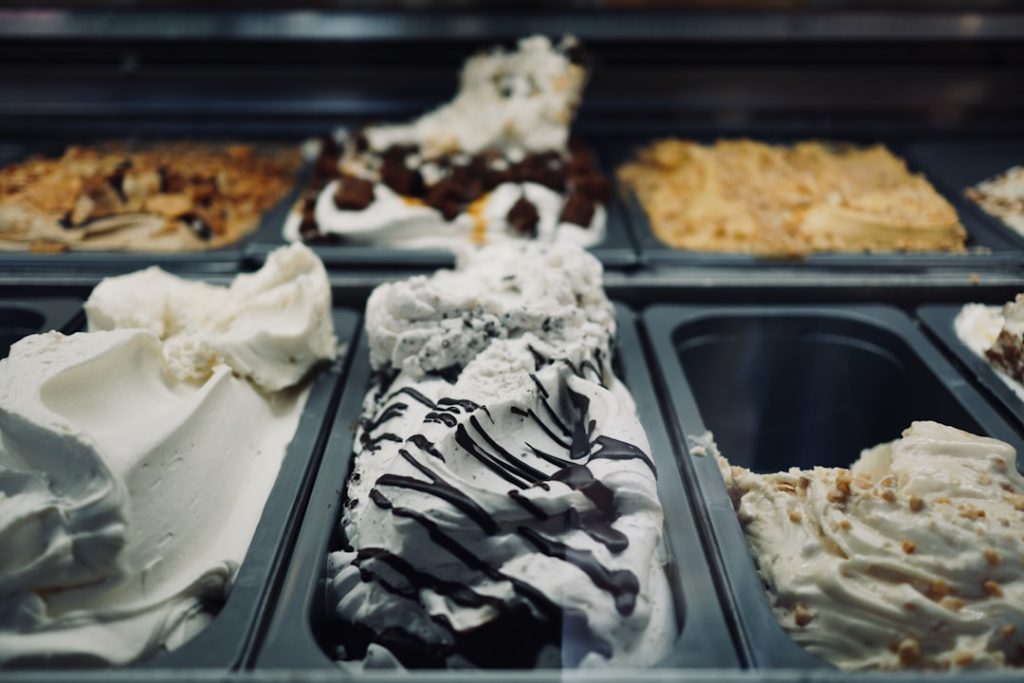
The origins of ice cream can be traced back to ancient civilizations, where frozen desserts were crafted from snow and ice mixed with various flavorings. Historical records suggest that as early as 200 BC, the Chinese were creating a form of ice cream by combining milk and rice with snow. This early version of the beloved treat was a luxury reserved for the elite, as the ingredients were not easily accessible to the general populace.
The art of making frozen desserts evolved over centuries, with the introduction of new techniques and ingredients that would eventually lead to the ice cream we know today. By the 16th century, ice cream began to gain popularity in Europe, particularly in Italy and France. The introduction of sugar and cream into the mix transformed the texture and flavor profile, making it more appealing to a broader audience.

The first recorded recipe for ice cream appeared in a book published in 1718 by a British aristocrat, which detailed a method for making a creamy frozen dessert. The invention of the hand-cranked ice cream maker in the 19th century marked a significant turning point in production methods, allowing for greater consistency and ease of use. This innovation laid the groundwork for the industrialization of ice cream production, which would soon follow.
Key Takeaways
- Industrial churners revolutionized ice cream production by increasing efficiency and output.
- They enable consistent texture and quality through controlled freezing and mixing processes.
- Modern churners incorporate advanced technology for improved energy efficiency and automation.
- Implementing industrial churners requires careful consideration of scale, cost, and product type.
- Future trends focus on sustainability and enhanced customization in ice cream manufacturing.
The Role of Industrial Churners in Modern Ice Cream Production
Industrial churners have become indispensable in the contemporary landscape of ice cream production, revolutionizing how this beloved dessert is made on a large scale. These machines are designed to mix and aerate the ice cream base while simultaneously freezing it, ensuring a smooth and creamy texture that is difficult to achieve through traditional methods. The advent of industrial churners has allowed manufacturers to produce vast quantities of ice cream with remarkable efficiency, meeting the ever-growing consumer demand for this frozen treat.
The design and functionality of industrial churners have evolved significantly over the years. Modern churners are equipped with advanced technology that allows for precise control over temperature, mixing speed, and aeration levels. This level of control is crucial in achieving the desired texture and flavor profile that consumers expect from high-quality ice cream.
Additionally, industrial churners can accommodate various formulations, including dairy-free and low-fat options, catering to diverse dietary preferences and trends in the market.
Advantages of Using Industrial Churners
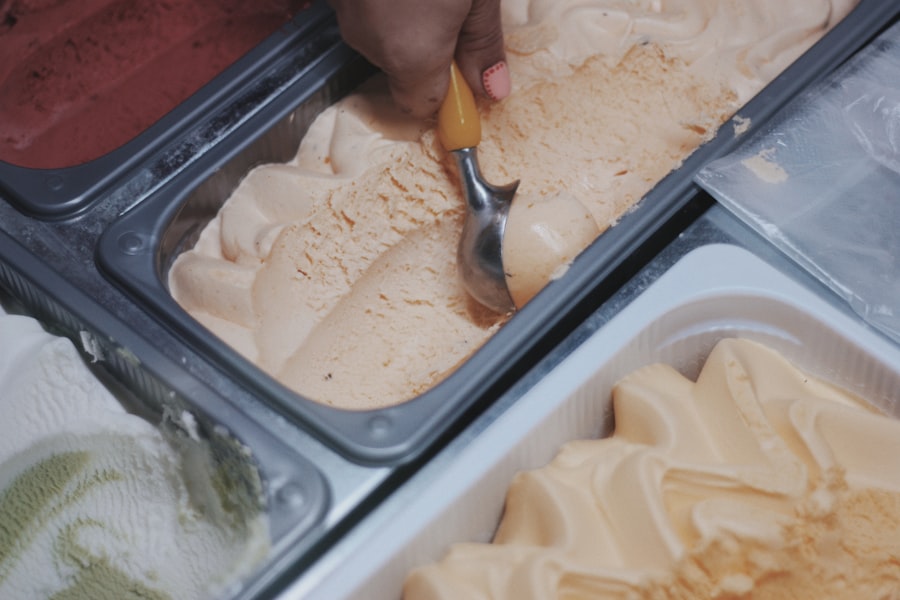
One of the primary advantages of using industrial churners in ice cream production is their ability to produce large volumes of ice cream quickly and consistently. Traditional methods often require significant manual labor and time, which can lead to variations in texture and flavor. In contrast, industrial churners automate much of the process, reducing labor costs and minimizing human error.
This efficiency is particularly beneficial for large-scale manufacturers who need to meet high demand without compromising quality. Another significant advantage is the enhanced control over the freezing process. Industrial churners utilize advanced refrigeration systems that allow for rapid freezing, which is essential for creating a smooth texture by minimizing the formation of ice crystals.
The ability to adjust parameters such as mixing speed and temperature ensures that each batch meets specific quality standards. Furthermore, these machines can incorporate various ingredients seamlessly, allowing for creative flavor combinations and inclusions without disrupting the production flow.
The Process of Ice Cream Production with Industrial Churners
| Step | Description | Typical Duration | Temperature Range | Key Metrics |
|---|---|---|---|---|
| Mixing | Combining milk, cream, sugar, and stabilizers to form the ice cream base | 15-30 minutes | 20-25°C (room temperature) | Fat content: 10-16%, Sugar content: 12-16% |
| Pasteurization | Heating the mix to kill harmful bacteria | 30 seconds to 1 minute | 72-85°C | Temperature and time critical for safety |
| Homogenization | Breaking down fat molecules to improve texture and stability | Few seconds | 60-80°C | Pressure: 1500-2500 psi |
| Aging | Allowing the mix to rest for better fat crystallization and hydration | 4-24 hours | 0-4°C | Viscosity increase, improved texture |
| Freezing (Industrial Churner) | Freezing the mix while incorporating air to form ice cream | 3-5 minutes | -5 to -7°C | Overrun (air incorporation): 30-100% |
| Hardening | Rapid freezing to stabilize the ice cream structure | 2-4 hours | -25 to -30°C | Final product temperature and firmness |
The process of ice cream production using industrial churners begins with the preparation of the base mixture, which typically consists of milk, cream, sugar, stabilizers, and emulsifiers. These ingredients are carefully measured and blended to create a homogeneous mixture that serves as the foundation for the final product. Once the base is prepared, it is transferred to the industrial churner, where it undergoes a series of processes that transform it into ice cream.
As the mixture enters the churner, it is subjected to continuous mixing while being cooled to freezing temperatures. This simultaneous mixing and freezing process is crucial for achieving the desired texture. The churner incorporates air into the mixture, a process known as overrun, which contributes to the lightness and creaminess of the final product.
The amount of air incorporated can be adjusted based on the desired density and mouthfeel of the ice cream. After reaching the appropriate consistency, the ice cream is then discharged from the churner and can be further processed or packaged for distribution.
Impact of Industrial Churners on Efficiency and Output
The introduction of industrial churners has had a profound impact on both efficiency and output in ice cream production facilities. These machines are capable of producing hundreds or even thousands of liters of ice cream per hour, significantly increasing production capacity compared to traditional methods. This scalability is essential for meeting consumer demand, especially during peak seasons when sales typically surge.
Moreover, industrial churners streamline the production process by reducing downtime between batches. Traditional methods often require extensive cleaning and setup time before producing a new flavor or batch size. In contrast, modern churners are designed for quick changeovers, allowing manufacturers to switch between different flavors with minimal interruption.
This flexibility not only enhances productivity but also enables companies to respond swiftly to market trends and consumer preferences.
Innovations in Industrial Churner Technology
Recent advancements in industrial churner technology have further enhanced their capabilities and efficiency. One notable innovation is the integration of smart technology into churners, allowing for real-time monitoring and control of various parameters during production. Manufacturers can now track temperature fluctuations, mixing speeds, and ingredient incorporation rates remotely, ensuring optimal conditions throughout the process.
Additionally, some modern churners are equipped with self-cleaning features that reduce maintenance time and improve hygiene standards within production facilities. These innovations not only enhance operational efficiency but also contribute to food safety by minimizing the risk of contamination between batches. Furthermore, energy-efficient designs are becoming increasingly common in industrial churners, helping manufacturers reduce their environmental footprint while maintaining high output levels.
Considerations for Implementing Industrial Churners in Ice Cream Production
When considering the implementation of industrial churners in an ice cream production facility, several factors must be taken into account. First and foremost is the initial investment cost associated with purchasing high-quality churners. While these machines can significantly enhance productivity and efficiency, manufacturers must evaluate their budget and projected return on investment carefully.
Another critical consideration is the training required for staff to operate these advanced machines effectively. Employees must be familiar with the technology and understand how to troubleshoot potential issues that may arise during production. Investing in comprehensive training programs can help ensure that staff members are well-equipped to maximize the benefits of industrial churners while maintaining high-quality standards.
Future Trends in Ice Cream Production with Industrial Churners
As consumer preferences continue to evolve, so too will the role of industrial churners in ice cream production. One emerging trend is the growing demand for plant-based and dairy-free alternatives. Industrial churners are being adapted to accommodate these formulations without compromising on texture or flavor, allowing manufacturers to tap into this expanding market segment.
Additionally, sustainability is becoming increasingly important in food production, including ice cream manufacturing. Future innovations may focus on reducing energy consumption during production processes or utilizing eco-friendly materials in churner construction. As consumers become more environmentally conscious, manufacturers will need to align their practices with these values to remain competitive.
In conclusion, industrial churners have transformed ice cream production by enhancing efficiency, output, and product quality. As technology continues to advance and consumer preferences shift, these machines will play an integral role in shaping the future landscape of this beloved dessert industry.