
The agricultural landscape is undergoing a significant transformation, driven by the advent of cutting-edge farm equipment machinery. This evolution is not merely a response to the growing global population and the consequent demand for food but also a reflection of technological advancements that have redefined traditional farming practices. Modern machinery encompasses a wide array of tools and equipment designed to enhance productivity, efficiency, and sustainability in farming operations.
From advanced tractors equipped with GPS technology to automated harvesters that can operate with minimal human intervention, the latest farm equipment is revolutionizing how farmers cultivate their land. The integration of technology into agricultural machinery has led to the development of multifunctional equipment that can perform various tasks, such as planting, fertilizing, and harvesting, all in one go. This versatility not only saves time but also reduces labor costs, which are increasingly becoming a significant concern for farmers worldwide.
Moreover, the latest machinery is designed with user-friendly interfaces and smart technology that allow for real-time monitoring and data collection, enabling farmers to make informed decisions based on precise information about their crops and soil conditions. As we delve deeper into the advancements in agricultural technology, it becomes evident that these innovations are not just tools; they are essential partners in the quest for sustainable and efficient farming.
Key Takeaways
- Modern farm equipment integrates advanced precision agriculture technologies for improved efficiency.
- Automation and AI are transforming traditional farming practices, enhancing productivity.
- Drones offer significant benefits in monitoring crops but present operational challenges.
- Sustainable farming practices are increasingly prioritized in the design of new machinery.
- Ongoing training is essential for farmers to effectively adopt and utilize innovative equipment.
Advancements in Precision Agriculture Technology
Precision agriculture technology represents a paradigm shift in how farmers approach crop management and resource allocation. By leveraging data analytics, satellite imagery, and sensor technology, precision agriculture allows for a more targeted approach to farming. For instance, soil sensors can provide real-time data on moisture levels, nutrient content, and pH balance, enabling farmers to apply water and fertilizers only where needed.
This targeted application not only conserves resources but also minimizes environmental impact by reducing runoff and chemical leaching into nearby water bodies. Furthermore, advancements in drone technology have significantly enhanced precision agriculture practices. Drones equipped with multispectral cameras can capture high-resolution images of fields, allowing farmers to assess crop health and identify areas that require attention.
This aerial perspective provides insights that are often missed from the ground level, enabling timely interventions that can lead to improved yields. Additionally, the integration of Geographic Information Systems (GIS) with precision agriculture tools allows for sophisticated mapping and analysis of farm data, facilitating better planning and management strategies. As these technologies continue to evolve, they promise to further refine agricultural practices, making them more efficient and environmentally friendly.
The Impact of Automation on Farming Practices
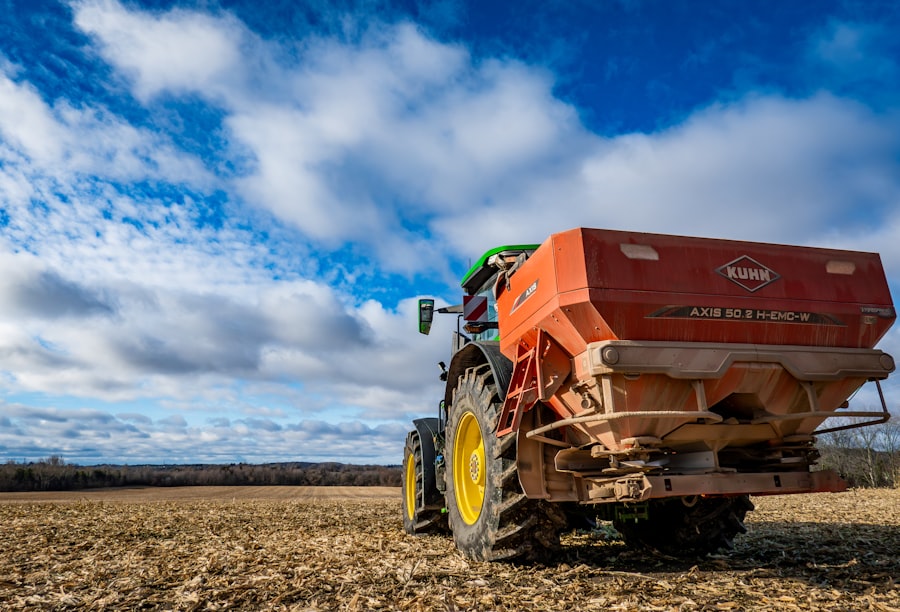
Automation is reshaping the agricultural sector by introducing machinery that can perform tasks with minimal human intervention. This shift towards automation is driven by several factors, including labor shortages, rising operational costs, and the need for increased productivity. Automated machinery such as robotic harvesters and autonomous tractors are becoming commonplace on farms, allowing for continuous operation without the fatigue or limitations associated with human labor.
For example, companies like John Deere have developed autonomous tractors that can be programmed to plow fields or plant seeds with precision while being monitored remotely. The impact of automation extends beyond mere labor replacement; it also enhances operational efficiency and accuracy. Automated systems can work around the clock, optimizing time management and ensuring that critical tasks are completed promptly.
Moreover, these systems often come equipped with advanced sensors and AI capabilities that enable them to adapt to changing conditions in real-time. For instance, an automated sprayer can adjust its application rates based on the specific needs of different sections of a field, ensuring that resources are used judiciously. However, this shift towards automation also raises questions about the future role of human labor in agriculture and the skills required to operate and maintain these sophisticated machines.
Benefits and Challenges of Using Drones in Agriculture
| Aspect | Benefits | Challenges |
|---|---|---|
| Crop Monitoring | Real-time data collection, early detection of diseases and pests | Requires skilled operators, data interpretation can be complex |
| Precision Agriculture | Targeted application of fertilizers and pesticides, reduces waste | High initial investment, technology integration issues |
| Field Mapping | Accurate field mapping and soil analysis, improves planning | Weather dependent, limited flight time per battery charge |
| Labor Efficiency | Reduces manual labor, increases operational efficiency | Potential job displacement, requires training |
| Cost | Long-term cost savings through optimized resource use | High upfront costs, maintenance expenses |
| Environmental Impact | Minimizes chemical runoff, promotes sustainable practices | Battery disposal concerns, potential disturbance to wildlife |
Drones have emerged as a powerful tool in modern agriculture, offering numerous benefits while also presenting certain challenges. One of the primary advantages of using drones is their ability to provide detailed aerial imagery and data analysis at a fraction of the cost of traditional methods. Farmers can utilize drones for crop monitoring, irrigation management, and even livestock tracking.
The ability to quickly survey large areas allows for timely decision-making regarding pest control or irrigation needs, ultimately leading to better crop management and increased yields. However, the adoption of drone technology is not without its challenges. Regulatory hurdles pose significant barriers to widespread use; many countries have strict regulations governing drone flights, particularly concerning altitude limits and no-fly zones near airports or populated areas.
Additionally, there is a learning curve associated with operating drones effectively. Farmers must be trained not only in piloting drones but also in interpreting the data collected to make informed decisions about their farming practices. Furthermore, concerns about privacy and data security arise as drones collect vast amounts of information about farm operations.
Balancing these benefits and challenges will be crucial as the agricultural sector continues to integrate drone technology into its practices.
The Role of Artificial Intelligence in Farm Equipment Machinery
Artificial Intelligence (AI) is playing an increasingly pivotal role in enhancing farm equipment machinery’s capabilities. By incorporating AI algorithms into agricultural machinery, farmers can achieve unprecedented levels of efficiency and precision in their operations. For instance, AI-powered systems can analyze vast datasets from various sources—such as weather patterns, soil conditions, and crop health—to provide actionable insights that guide farming decisions.
This predictive capability allows farmers to optimize planting schedules, irrigation practices, and pest management strategies based on real-time data. Moreover, AI is revolutionizing equipment functionality through automation and machine learning. Smart tractors equipped with AI can learn from previous operations to improve their performance over time.
For example, they can adjust their speed and implement settings based on soil type or crop variety encountered during operation. This adaptability not only enhances productivity but also reduces waste by ensuring that inputs are applied more accurately. As AI technology continues to advance, its integration into farm equipment machinery will likely lead to even more sophisticated applications that further streamline agricultural processes.
Sustainability and Environmental Considerations in Modern Farming
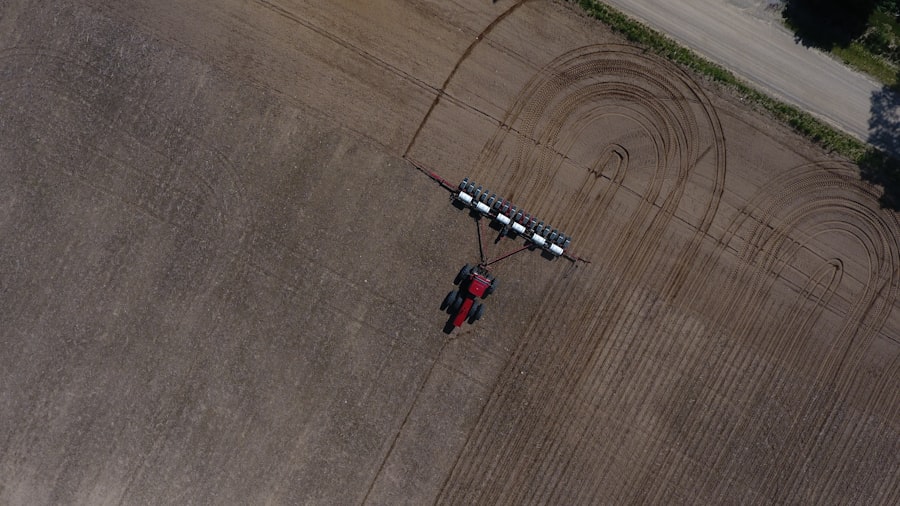
Sustainability has become a cornerstone of modern farming practices as the agricultural sector grapples with the challenges posed by climate change and resource depletion. The latest farm equipment machinery is increasingly designed with sustainability in mind, focusing on reducing environmental impact while maintaining productivity. For instance, precision agriculture technologies enable farmers to apply fertilizers and pesticides more judiciously, minimizing chemical runoff into waterways and reducing soil degradation.
Additionally, many new machines are being developed with energy efficiency as a priority. Electric tractors and hybrid models are gaining traction as farmers seek alternatives to traditional diesel-powered equipment. These innovations not only lower greenhouse gas emissions but also reduce fuel costs over time.
Furthermore, sustainable practices such as cover cropping and reduced tillage are being supported by modern machinery designed to facilitate these methods without compromising efficiency or yield potential. As awareness of environmental issues grows within the agricultural community, the push for sustainable farming practices will continue to shape the development of new technologies.
Future Trends and Innovations in Agricultural Machinery
The future of agricultural machinery is poised for exciting innovations that will further transform farming practices. One notable trend is the increasing integration of Internet of Things (IoT) technology into farm equipment. IoT-enabled devices can communicate with each other and provide real-time data analytics that enhance decision-making processes on farms.
For example, connected sensors can monitor soil moisture levels and automatically trigger irrigation systems when needed, ensuring optimal water usage while conserving resources. Another emerging trend is the development of vertical farming systems that utilize advanced machinery for indoor crop production. These systems leverage controlled environments to grow crops year-round while minimizing land use and water consumption.
Innovations such as hydroponics and aeroponics are gaining popularity as they allow for efficient nutrient delivery directly to plant roots without soil. As urbanization continues to rise, vertical farming could play a crucial role in meeting food demands while reducing transportation emissions associated with traditional farming methods.
The Importance of Training and Education for Farmers in Adopting New Equipment
As agricultural technology continues to evolve rapidly, the importance of training and education for farmers cannot be overstated. The successful adoption of new equipment relies heavily on farmers’ ability to understand how to operate these advanced machines effectively. Training programs that focus on both technical skills and data interpretation are essential for ensuring that farmers can maximize the benefits of their investments in modern machinery.
Moreover, educational initiatives should also address the broader implications of adopting new technologies within farming communities. Farmers must be equipped not only with practical skills but also with knowledge about sustainable practices and environmental stewardship associated with modern equipment use. Collaborative efforts between agricultural institutions, technology providers, and local governments can facilitate access to training resources that empower farmers to embrace innovation confidently while navigating the complexities of modern agriculture.
In conclusion, as we explore the latest advancements in farm equipment machinery and their implications for agriculture’s future, it becomes clear that technology will play an increasingly vital role in shaping sustainable farming practices worldwide.